
15 Adjectives that change meaning with SER and ESTAR
15 Adjectives that change meaning with ser and estar We return to one of the most important grammatical topics in Spanish. The verbs ser and estar! If there were a ranking of the most relevant verbs in Spanish, ser and estar would be in the top 5 without a doubt. Because
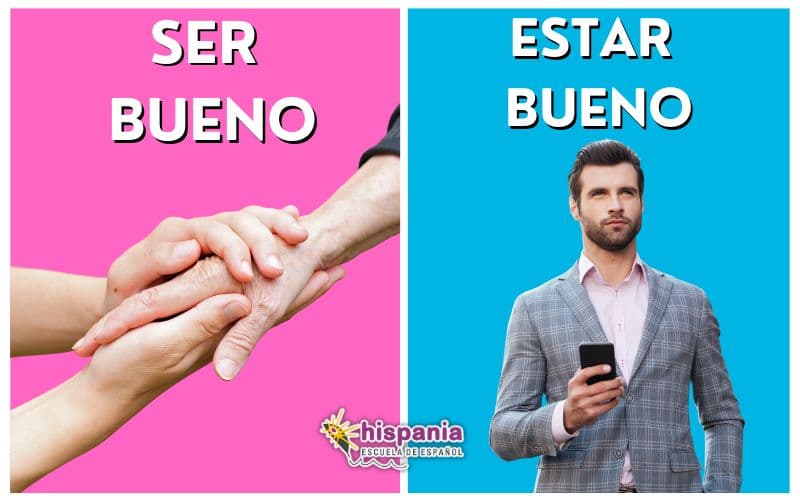
We return to one of the most important grammatical topics in Spanish. The verbs ser and estar!
If there were a ranking of the most relevant verbs in Spanish, ser and estar would be in the top 5 without a doubt.
Why are these verbs so important?
The answer is simple: they are used for a lot of things!
Although we will make a brief summary of their most important uses, today we will not focus on this.
We are going to talk about a super interesting topic that usually gives our dear Spanish students a lot of headaches: adjectives that change meaning with ser and estar.
In fact, there are many adjectives that can be used with both verbs and that have totally different meanings with each one.
We will see all these adjectives in phrases and examples, so that you understand them well.
Many of these adjectives are so basic like good, bad, rich or ready. They are words that we use every day, so it is necessary that you learn their correct use with both ser and estar.
You will see that most are adjectives of people, but some can also be used to refer to things, places, animals or situations.
In another section we will also see some colors that express ideas curious with ser and estar.
In the end, as always, we recapitulate everything we learned with some exercises with ser and estar and adjectives that change meaning.
Without further ado, let's get started!

To be or to be? Review of some uses
The verbs ser and estar in Spanishare known as copulative verbs.
What is a copulatory verb?
They are verbs that express characteristics or states.
But these verbs have more uses. In our school, Hispania, Spanish school, we give a lot of importance to these verbs and the implementation of all their uses so that your Spanish sounds very natural.
Do you want to speak so fluently like a native spanish and use the verbs ser and estar like them?
If so, check out our face-to-face Spanish courses or online Spanish courses. They will help you master Spanish with expert teachers at the best school in Valencia 🤗.
Some of the main uses of verb BE they are:
Identity: designates the name of someone or something or what it is.
- Example: «She is Nala. It is "my cat."
Nationality: the origin of a person, it can be the country, the city, the neighborhood, etc. It is used with the preposition of (ser + de) or with the adjective of nationality.
- Example: «Julian is from Valencia. He is Valencian.
Profession: a person's job.
- Example: «Lucia is teacher."
Descriptions: We use person adjectives to describe both physical appearance and character.
- Example: «Paco is a seducer, is "very handsome and intelligent."
Time and hours: we can mark what time it is and talk about the seasons, the years, the days of the week or the months.
- Example: «Today is Thursday. It is the year 2023 and right now are "two in the afternoon."
On the other hand, with theverb BE we can talk about:
Location: indicate the location of a person, animal or thing.
- Example: «I am in house."
moods: we can express temporary emotional states.
- Example: «I am happy."
Estar + gerund: with this periphrasis, we express unfinished actions in process.
- Example: «Right now, Laura is cleaning the table."
Time: we can also express time with the verb estar, but this time it is always used in the first person plural and with the preposition to to talk about days of the week or dates (we are) and in for months or years (we are in).
- Example: «It's Monday. We are in "September."

Adjectives that change meaning with ser and estar
Did you know these uses? They are basic so that your Spanish sounds correct.
Now, yes, let's get to today's central topic. Adjectives with meaning that changes depending on whether they go with the verb ser or estar.
Let's see a total of 15 adjectives + 4 colored adjectives.
Are we ready? Well let's go get them!
good
There are several meanings of BE GOOD.
On the one hand, it refers to the goodness of a person. That is to say, he has a good heart.
The other meaning of good with the verb to be is that a thing or food it has quality or is it healthy.
Examples:
- «She it's good"I would never hurt anyone."
- «This old wine it's good».
BE GOOD It refers to two things. If we talk about a person, it means that he is very pretty and attractive. If we talk about a food, it means that it has good taste.
Examples:
- «Since she goes to the gym, she it's good».
- «These oranges they are very good».
bad
BE BAD It is just the opposite of the previous adjective. You can express that a person has evil and bad intentions or that a thing or food is poor quality or harmful for health.
Examples:
- «He it's bad"He enjoys making fun of people."
- «This dessert must be bad For health, it has a lot of sugar.
BE BAD refers to a person who is sick or to a meal that has bad taste or what is expired.
Let's look at some examples of the meaning of be bad:
- «Today Luis is not coming to work, it's bad».
- «This yogurt it's bad. Normal, it expired a month ago.

dry
If a person is very would be when speaking, what does he use few words and expresses few emotions, we say IT IS DRY.
Example:
- «This clerk makes me uncomfortable. It is very dry».
BE DRY is used to say that the surface of something or someone's body has no no water.
Example:
- «Yesterday my shirt got wet because of the rain, but today it's dry».
Open
This is one of the good adjectives of a person.
A person who IT IS OPEN is a person who has a flexible mind, who admits ideas different from his own, a person with whom you can talk about everything and who does not try to impose his ideas.
It is also said about people who like to experiment and try new things.
Example:
- «I love talking to you because you are open of mind.
BE OPEN It is mainly used when people open the doors of a house or a place, which means that can pass. It is also used with windows.
Example:
- «Doesn't the store is open? How odd! At these times it is always open.
Closed
BE CLOSED It is said when a person has very clear ideas and it is difficult to get away from them and change their plans.
This is a person a little inflexible. It is also said of shy people that they don't express their feelings.
Example:
- «Lola has a hard time making new friends because It is quite closed».
BE CLOSED refers to the doors, windows or buildings that they are not open.
Example:
- «Today is Sunday and that's why school is closed».
Rich
BE RICH expresses a person who has a lot of money.
Example:
- «Throughout his life he earned a lot of money and now is rich».
BE RICH It is one of the most used food flavor adjectives. It means that a food is delicious.
Example:
- «This pizza it's rich. Where is he from?
proud
BE PROUD It has a slightly negative meaning. It is said of a person that you love too much to herself.
Also from a person who never admits his mistakes, who is believed to be always right.
Example:
- «I don't like this guy, he's always bragging about his skills. He is very proud».
BE PROUDInstead it is something positive. It is to feel a sensation of satisfaction for something good what we have done or for something we have.
Example:
- «My son, I am very proud of you "You have become a great person."
Major
BEING OLDER It is used when a person, objectively, has a advanced age and no longer young. It is also used to compare the ages of two people and indicate who is older.
Example:
- «My grandmother is 80 years old, is older».
- «Jaime is older than Peter.
BEING OLDER refers more to the feeling that a person has about his physique.
Maybe he's still young but he feels older because you don't have much energy, you have frequent physical pain, or your skin is very wrinkled.
Example:
- «They told me to play a soccer game, but I'm not going to go. I I'm older for that intensity.
fresh
What does the adjective mean fresh?
If we say that someone or something IT'S FRESH, means that it's new or that has characteristics or ideas original.
Example:
- «I loved this film. It's very fresh"I had never seen anything like it."
BE FRESH refers to the fact that a thing is very recent and new, and it is the best time to enjoy it.
Example:
- «Now that the topic of AI (Artificial Intelligence) it's fresh"I'm going to take the opportunity to learn about it."

Attentive
a person SHE IS ATTENTIVE when is courteous, kind and has consideration for others.
Example:
- «She was so attentiveand kind that I felt as if we had known each other all our lives.
BE ATTENTION refers to being very concentrated in a task or in something someone does or says.
Example:
- "Let him study, now that he's finally is attentive».
awake
BE AWAKEN refers to a person who is very cunning and clever to make a living, start a business or solve problems.
Example:
- «Rebeca has already opened 3 companies. She always hhas been awakened for business.
BE AWAKE It is very easy to understand, when we are not asleep, our brain is awake and conscious.
Example:
- «I hear the baby's screams, now is awake».
Serious
what is BE SERIOUS? It refers to a situation being quite bad or dramatic.
Example:
- «After the earthquake, the situation on the island It was very serious».
Instead, BE SERIOUS refers to a person who has a very bad state of health, between life and death.
Example:
- «They are going to operate urgently, is very serious».
Ready
BE READY It is a very good characteristic of a person. Ready has the meaning of being smart.
Example:
- «She she is very smart"He is able to pass the exams only by studying one day before."
BE READY means be prepared to do something.
Example:
- «Let the game begin, I'm ready».
Interested
The meaning of adjective interested with the verb to be it has a negative connotation in people.
An interested person searches extract a personal benefitof someone, even if it is harmful to the other person.
You love someone for something they have, like money, beauty, or fame, and not for who that person really is.
Example:
- "I have realized thatare you interested"You only call me so I can leave you money."
BE INTERESTEDisshow interestfor something that you like or that catches your attention.
Example:
- «Tell me more about your trip,I'm interested».
Bored
What is the meaning ofBEBORED?
A person who is boring is a personnot fun, lacking charisma. Nobody wants to spend time with boring people, don't be like that!
Example:
- «I had a date with this girl butit was very boring."I don't think we will meet again."
BE BOREDIt is a state of mind. It means your time passes slowly,no funand with boredom.
Example:
- «I've been waiting at the consultation for an hour.I'm bored».
What did you think of these?15 adjectives that change meaning with ser and estar? They are adjectives that are used very frequently, it will be good for you to know them.
So that you have them more visually accessible, we have prepared the followingboardfor you as a summary 😉.
| BE | BE |
|---|---|
|
Well:
|
Well:
|
|
Bad:
|
Bad:
|
|
Dry:
|
Dry:
|
|
Open:
|
Open:
|
|
Closed:
|
Closed:
|
|
Rich:
|
Rich:
|
|
Proud:
|
Proud:
|
|
Major:
|
Major:
|
|
Fresh:
|
Fresh:
|
|
Attention:
|
Attention:
|
|
Awake:
|
Awake:
|
|
Serious:
|
Serious:
|
|
Ready:
|
Ready:
|
|
Interested:
|
Interested:
|
|
Boring:
|
Boring:
|

Colors that change meaning with ser and estar
In Spanish, we have many expressions with colors.
If we use the verbs ser and estar, have different meanings.
We are going to anticipate and we are going to talk about the verb to be. When we use the verb to be with a colorWe are simply expressing the color of something.
Examples:
- "The wall is white."
- "The car is black."
- "Tomatoes are red."
- "Bananas are yellow."
Easy, right?
If we use the verb be With colors, things change. Each one will have a different meaning and will be used to very specific things.
Do you want to know these expressions with the verb estar + colors?
Let's go there!
White
BE WHITE It is said when someone is very scared for something or in shock. Sometimes your face literally turns white at such a shocking event.
Example:
«you are very white. It feels like you've seen a ghost!
Black
BE BLACK means to be very angry for something.
Example:
- «Leave me alone! I'm black of your nonsense.
Green
what is BE GREEN?
It's when someone is newbie at something and do not have enough experience to master a task.
Example:
- «You can tell that it is your first day in the office, it's green».
Red
We say that someone IT'S RED when a lot happens shame. This is because sometimes our face literally turns red when we feel this emotion.
Example:
- «It is obvious that he is embarrassed to speak in public, it's red».
Being and being exercises
How much vocabulary we have learned today! TRUE?
It's time to practice these adjectives with exercises.
Activity 1
In the first activity you simply have to drag the adjectives correct to their corresponding phrase.
Activity 2
In this second activity you must write the correct form of the verbs be or be. Pay close attention to the adjective they accompany, they are all in the present tense.
Have these activities with adjectives gone well? For sure yes!
We hope you liked this article and that it has helped you improve your Spanish if you had problems with these adjectives and their change of meaning with being and being.
The adjectives that we have put in this article are not the only ones. There is more.
Could you tell us more words that change meaning with ser and estar?
We look forward to your comments.
A big hug!
Article written by Carlos Martinez for Hispania, Spanish school.
More articles


